
When an application requires a continuous plastic profile, finding an existing extrusion with the right dimensions and material properties may seem like the simplest approach. For specialized OEM applications, however, a standard profile may not provide the required fit, durability, flexibility, environmental resistance, or integration with surrounding components.
Custom thermoplastic extrusion allows engineers to develop profiles around the requirements of the product rather than design the product around an existing extrusion.
The process involves more than creating a custom cross section. Material behavior, profile geometry, tooling, dimensional requirements, production volumes, and end-use conditions all influence the finished component.
How Does Thermoplastic Extrusion Work?
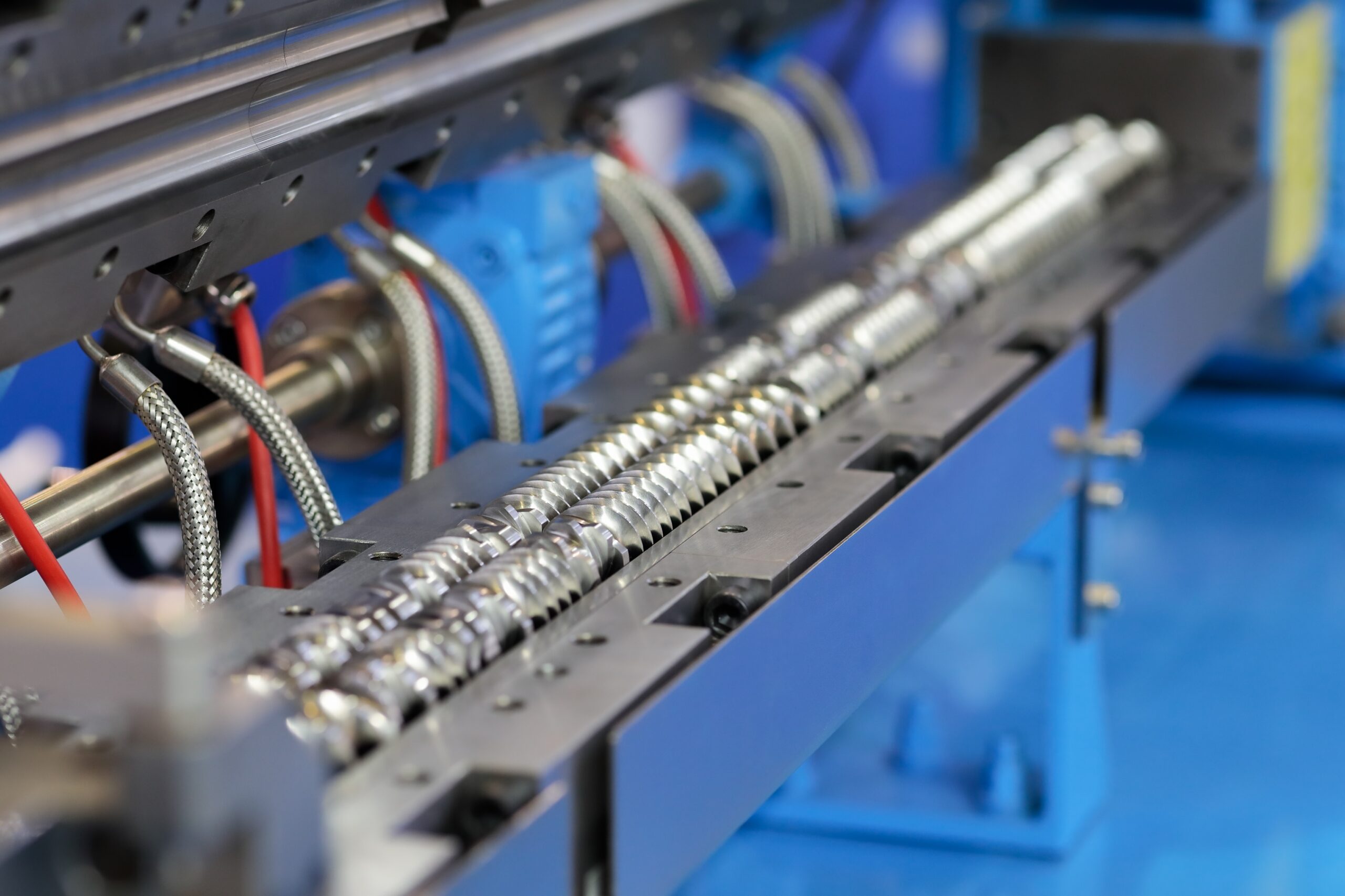
Thermoplastic extrusion is a continuous manufacturing process in which thermoplastic material is heated, processed, and forced through a die that creates a specific cross-sectional shape. The extrudate is then cooled and controlled before being cut, coiled, or prepared for additional manufacturing operations.
Because the process continuously creates the same cross section, extrusion is commonly used for products such as tubing, seals, trim, channels, guides, and other profiles.
Custom extrusion expands those possibilities. Instead of selecting a standard shape, engineers can develop profile geometry, materials, and other characteristics around the application’s functional requirements.
Start With the Performance Requirements
A custom extrusion project should begin with what the component needs to accomplish.
For example, does the profile need to remain rigid under load or does it need to flex repeatedly? Will it serve as a seal, guide, protective edge, structural feature, or interface between other components? Will it encounter heat, moisture, chemicals, abrasion, or outdoor conditions?
Engineers may need to define requirements related to:
- Strength and rigidity
- Flexibility
- Impact or wear resistance
- Operating temperature
- Chemical exposure
- Moisture and environmental conditions
- Fit with mating components
- Expected service life
- Appearance or surface characteristics
These requirements create the foundation for decisions about material, geometry, tolerances, and tooling.
This is also where engineering supportcan be valuable. Rather than treating extrusion as an isolated manufacturing process, the profile can be evaluated as part of the larger product and its operating environment.
Material Selection for Thermoplastic Extrusion
Material selection can significantly influence both extrusion performance and the characteristics of the finished component.
Different thermoplastics offer different combinations of rigidity, flexibility, toughness, chemical resistance, temperature performance, and other properties. They can also behave differently during extrusion as material flows through the tooling and cools into its final shape.
Felton works with a range of materials including nylon, PET, PBT, polypropylene, styrene, SAN, thermoplastic elastomers, and specialty formulations. The appropriate choice depends on the application rather than simply the extrusion process itself.
A thorough material evaluation should consider questions such as:
- What mechanical loads will the profile encounter?
- How flexible or rigid should the component be?
- What temperatures will it experience?
- Will chemicals, moisture, or abrasion affect the material?
- Are there weight or dimensional stability requirements?
- How will the material interact with mating components?
- What production and cost requirements must be considered?
Evaluating these factors early can help avoid selecting a material that meets one specification while creating challenges elsewhere in the product.
Designing Profile Geometry for Function and Manufacturability
One of the primary advantages of custom thermoplastic extrusion is the ability to create application-specific cross sections.
A profile might incorporate channels, lips, ribs, attachment features, hollow sections, or other geometry that contributes directly to its function. This can potentially reduce the need for separate components or additional assembly operations.
Geometry also needs to account for how thermoplastic material behaves during extrusion and cooling.
Wall thickness, transitions between sections, sharp features, and complex shapes can influence material flow and cooling. Large differences in section thickness may make dimensional control more difficult, while unnecessarily complicated geometry can increase tooling and manufacturing challenges.
Early engineering design involvement allows teams to evaluate whether the desired geometry can achieve the required function while remaining practical to manufacture.
Tool Design Is Part of Component Design
Every custom extrusion depends on tooling designed to transform flowing thermoplastic into the desired profile.
The extrusion die must account for more than the nominal CAD geometry. Material characteristics, flow behavior, cooling, and dimensional changes all affect how the final profile develops after leaving the die.
As a result, tool design and component design are closely connected.
Engineering and manufacturing teams may need to refine tooling to achieve the intended dimensions and profile characteristics. For complex applications, prototype development and testing can provide useful feedback before production requirements are finalized.
Having engineering, tooling, and manufacturing capabilities working together can shorten that feedback loop and help ensure design decisions reflect actual production behavior.
Set Tolerances Around Functional Requirements
Tolerances are particularly important when an extrusion needs to interface with another component.
Engineers should identify which dimensions directly affect fit, sealing, attachment, alignment, or performance. Those critical dimensions can then receive appropriate attention during tooling development and process control, while less critical dimensions may allow greater variation.
This distinction matters because applying unnecessarily tight tolerances across an entire profile can increase manufacturing complexity without improving functionality.
A better approach is to define tolerances based on how the extrusion will actually be used. If possible, mating parts or representative samples can also help engineers evaluate fit and identify dimensional requirements that may not be obvious from drawings alone.
Use Prototyping to Reduce Extrusion Risk
Custom extrusions often benefit from validation before production quantities are required.
Prototyping and product development give engineers an opportunity to evaluate geometry, material behavior, fit, and performance while changes are still manageable.
Depending on the project, prototypes and early production samples can help answer questions such as:
- Does the profile fit the surrounding assembly?
- Does the material provide the expected rigidity or flexibility?
- Are critical dimensions being achieved?
- Does the component perform properly under expected operating conditions?
- Are geometry or tooling adjustments necessary?
- Can secondary manufacturing or assembly operations be completed efficiently?
The goal is to use physical results to refine the component and manufacturing approach before moving into sustained production.
Think Beyond the Extruded Profile
For OEMs, the extrusion itself may only be one part of the finished component.
Profiles may require cutting, forming, machining, joining, overmolding, assembly, or other secondary operations before they are ready for use. Considering those requirements during the design stage can simplify the transition from an extruded length to a production-ready component.
This broader manufacturing perspective is particularly useful when engineers are deciding whether individual features should be incorporated into the extrusion, added through a secondary operation, or produced using another process altogether.
Felton’s custom manufacturing services extend beyond extrusion to capabilities including machining, molding, forming, welding, overmolding, and assembly. This allows a custom extrusion to be developed as part of the complete manufacturing solution.
Engineering a Custom Thermoplastic Extrusion
Successful thermoplastic extrusion depends on the interaction between product requirements, material properties, profile geometry, tooling, tolerances, and manufacturing processes. Evaluating each factor independently can overlook the ways a decision in one area affects another.
Felton combines thermoplastic extrusion with material evaluation, engineering design, tool design, prototyping, and custom manufacturing capabilities. This integrated approach can support projects from early application requirements and material selection through tooling, validation, and production.
When an application requires more than a standard plastic profile, contact Felton to discuss your component requirements and explore a custom extrusion solution.