
From flexible seals and tubing to rigid structural profiles, thermoplastic extrusion provides a versatile way to manufacture continuous components with consistent cross-sectional geometry.
The process can be particularly effective when an application requires long lengths, repeatable profiles, or production quantities that make other manufacturing methods inefficient.
Achieving those advantages, however, starts well before production. Material selection, geometry, tolerances, wall thickness, and downstream operations all influence whether an extruded profile can be manufactured consistently and perform as intended.
What Is Thermoplastic Extrusion?
Thermoplastic extrusion is a continuous manufacturing process used to create parts with a consistent cross section.
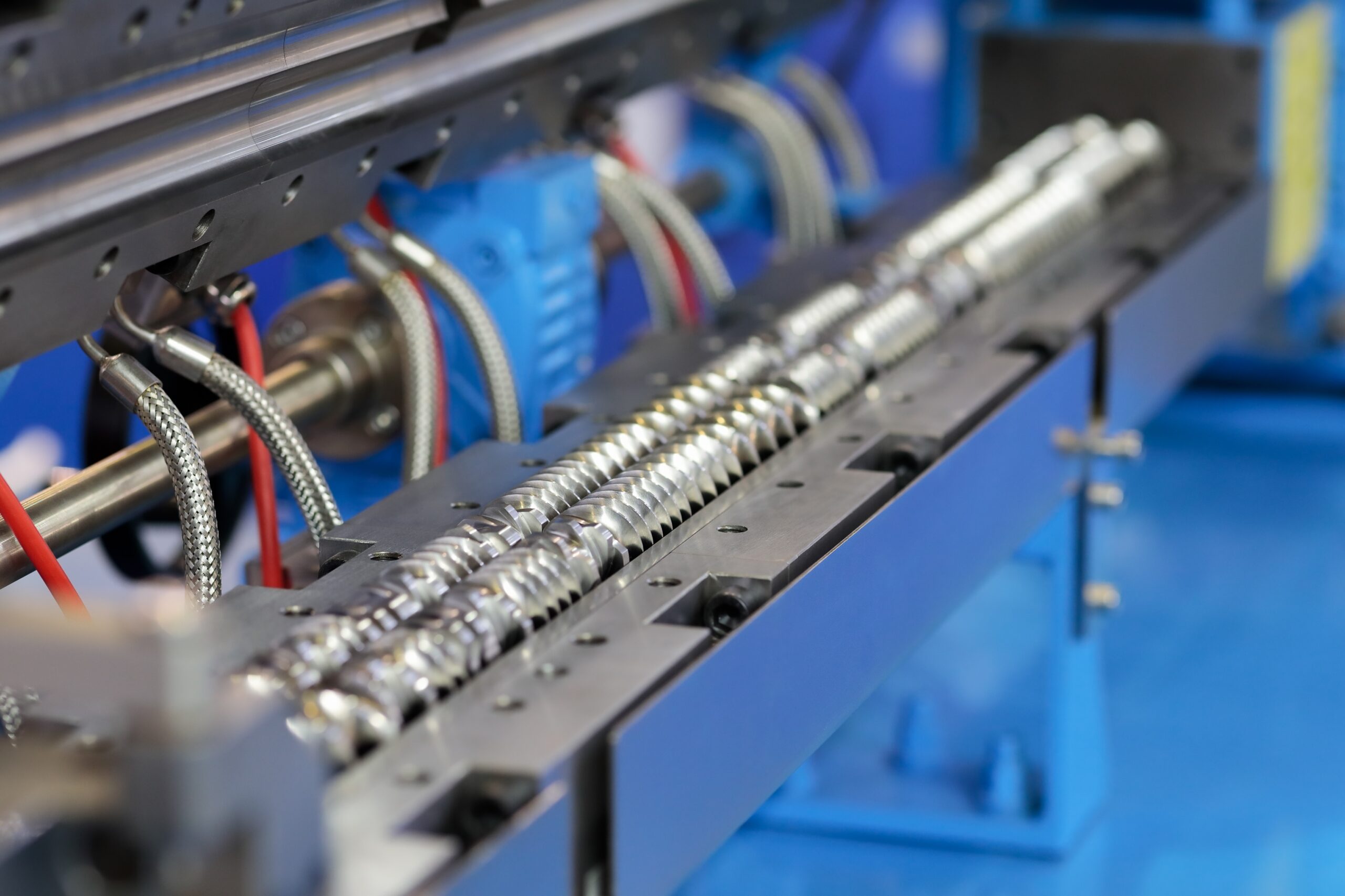
Thermoplastic resin is heated until it reaches a processable state and then forced through a specially designed die. The die establishes the profile’s cross-sectional shape. As the extrudate exits the die, it is cooled and guided through downstream equipment to maintain the required geometry before being cut, coiled, or otherwise prepared for additional operations.
Unlike processes that create one individual component per cycle, extrusion can continuously produce material in long lengths. This makes it well suited for products where the same profile extends throughout the component.
Custom dies also give engineers considerable flexibility in profile design, allowing extrusion to support application-specific shapes beyond basic tubes and channels.
What Can Be Made with Thermoplastic Extrusion?
Extrusion supports a wide range of industrial and OEM products. Common applications include:
- Seals: Continuous profiles can help close gaps, manage airflow, exclude contaminants, or protect equipment interfaces.
- Edge trim: Extruded profiles can provide protection, cushioning, finishing, or attachment along edges.
- Tubing: Extrusion is commonly used to create continuous hollow profiles for routing, protection, and other industrial functions.
- Custom profiles: Channels, guides, supports, retainers, and other application-specific geometries can be designed around an assembly.
- Custom components: Extruded profiles can be cut, formed, punched, joined, machined , or otherwise processed to create finished components or parts of larger assemblies. .
The versatility of the process makes extrusion applicable across many industries, but a successful profile still needs to be designed around both its end use and the realities of the extrusion process.
4 Key Thermoplastic Extrusion Design Considerations
A profile that looks straightforward in CAD may behave differently as heated material moves through a die and cools. Incorporating design-for-manufacturability principles early helps account for these process characteristics.
Material Selection
The appropriate thermoplastic depends on what the finished profile needs to accomplish.
Engineers should evaluate factors such as:
- Strength and flexibility
- Operating temperature
- Chemical and moisture exposure
- Wear requirements
- Environmental conditions
- Dimensional stability
- Cost and availability
Different thermoplastics also flow, cool, shrink, and respond to processing differently. Material choice therefore affects both product performance and manufacturability.
A structured material evaluation process can help engineers balance performance, durability, manufacturing requirements, and cost. Felton works with thermoplastics including nylon, PET, PBT, polypropylene, styrene, and SAN, along with thermoplastic elastomers and specialty formulations.
Profile Geometry
One of extrusion’s primary advantages is the ability to create custom cross sections. Geometry should still be developed with consistent material flow and cooling in mind.
Sharp transitions, complex features, deep channels, and significant differences in material thickness can make a profile more difficult to produce consistently.
When possible, simplify transitions and consider how each feature contributes to the component’s function. Early collaboration between product engineers and extrusion specialists can identify opportunities to maintain required functionality while creating a more extrusion-friendly design.
Tolerances
Tighter tolerances can increase manufacturing complexity, so tolerances should reflect the functional needs of the application.
Identify which dimensions directly influence fit, sealing, alignment, or assembly, and distinguish them from dimensions with greater flexibility. This allows tighter process control to be concentrated where it creates actual value.
Mating interfaces deserve particular attention. If an extruded profile connects to another component, engineers should evaluate how dimensional variation across both parts could affect final fit.
Wall Thickness
Wall thickness affects material flow, cooling behavior, dimensional stability, weight, and material usage.
Large variations in thickness within the same profile can lead to uneven cooling or dimensional inconsistencies. More uniform wall sections support more predictable material flow, cooling, and dimensional stability..
Wall thickness should ultimately be selected based on the combination of functional performance and manufacturing requirements rather than viewed as an isolated dimension.
Benefits of Thermoplastic Extrusion
When the product and production requirements are a good match for the process, thermoplastic extrusion offers several advantages.
- Cost efficiency: Continuous processing can provide an economical manufacturing method for repeatable profiles, particularly as production volumes increase.
- Continuous production: Extrusion can create profiles in extended lengths rather than manufacturing each section individually.
- Material flexibility: Engineers can select from numerous thermoplastic materials and formulations based on strength, flexibility, temperature, environmental, and other application requirements.
- Customization: Purpose-built dies allow engineers to incorporate functional geometry directly into a profile, potentially simplifying downstream manufacturing and assembly.
Extrusion can also fit into a broader manufacturing strategy involving secondary operations or assemblies, including machining, molding, forming, welding, overmolding, and assembly capabilities.
Selecting a Thermoplastic Extrusion Partner
Selecting an extrusion partner involves more than determining whether the manufacturer can process a particular material.
Engineering support can be especially important for custom profiles. An experienced partner should be able to evaluate the application and help address questions surrounding material selection, profile geometry, tooling, dimensional requirements, prototypes, secondary operations, and production scalability.
Before selecting a supplier, consider asking:
- Can they provide design-for-manufacturability input?
- What thermoplastic materials can they process?
- Can they help evaluate material alternatives?
- Do they develop tooling for custom profiles?
- Can they support prototypes before production?
- What secondary manufacturing or assembly capabilities are available?
- Can they support the required production quantities and quality requirements?
Connecting extrusion with the broader product development process can help identify manufacturing considerations and potential risks while designs are still flexible.
Design Your Extruded Profile for Production Success
Felton supports custom thermoplastic profile development as part of its integrated engineering and manufacturing capabilities. With engineering, material evaluation, prototyping, extrusion, and additional manufacturing processes available within the same organization, Felton can support projects from initial application requirements through production.
If you want to know more about the process and benefits of thermoplastic extrusion, continue learning more in Part 2 of our blog series.
You can also contact our team to discuss your thermoplastic extrusion requirements and develop a profile engineered around your application.